
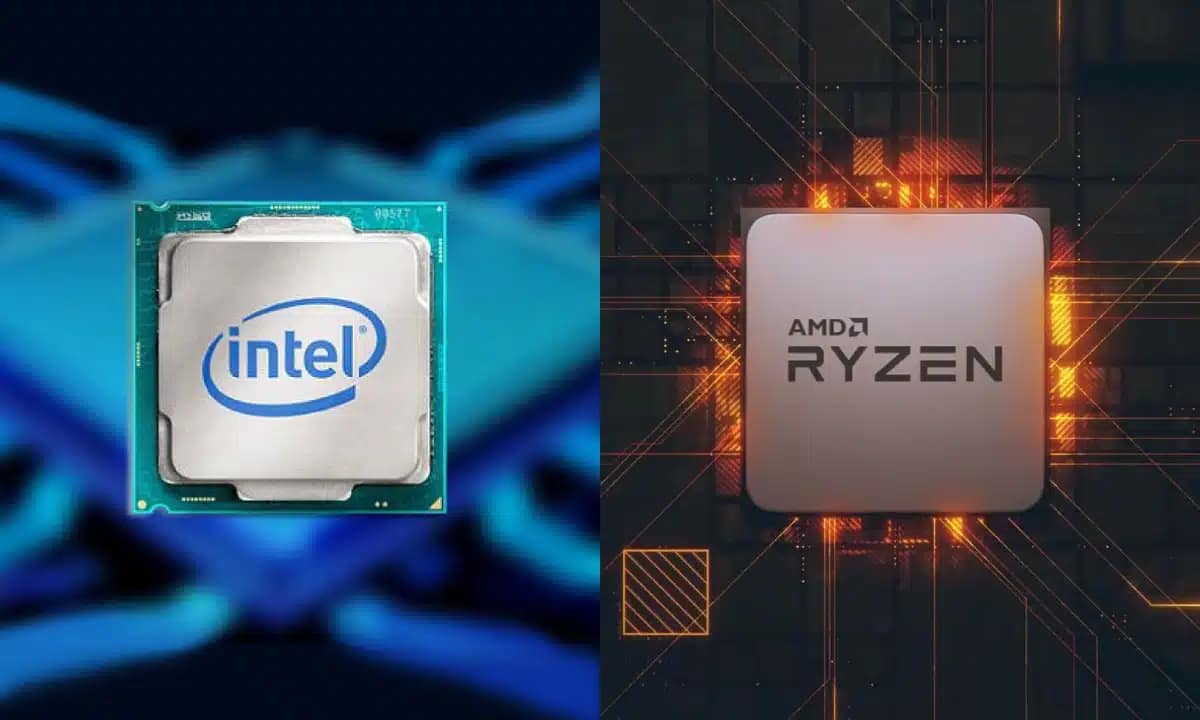
The choice between Intel Xeon vs AMD EPYC depends less on the “brand” and much more on the specific workload your server will face.
Historically, Intel dominated due to its stability and ecosystem, while AMD revolutionized the market with higher core counts and energy efficiency. Today, both brands offer cutting-edge technologies, but with distinct focuses.
Here’s a practical guide to help you make your decision:
1. AMD EPYC (Series 9000 – Zen 5 “Turin”)
AMD continues to reign supreme in density and efficiency. It’s the ideal choice if your goal is to pack maximum power into the smallest possible footprint.
- Highlight: Up to 192 cores per processor (models like the EPYC 9965).
- Best for:
- Virtualization: The high core count allows you to host significantly more Virtual Machines (VMs) per physical server.
- Cloud and HPC (High-Performance Computing): Excellent for massive parallel processing.
- Energy Efficiency (TCO): Generally offers better performance per Watt, reducing electricity and cooling costs.
- Memory Bandwidth: Supports 12 channels of DDR5 memory, ideal for applications that move large volumes of data.
2. Intel Xeon (Series Xeon 6 – Granite Rapids / Sierra Forest)
Intel responded by focusing on specialized acceleration and per-core performance. If your software relies on specific Intel instructions, it’s still unbeatable.
- Highlight: Integrated accelerators (AMX for AI, QAT for compression and security).
- Best for:
- AI and Deep Learning: Intel AMX support accelerates AI inference without needing a dedicated GPU in many cases.
- Relational Databases: Often outperforms tasks requiring low latency and high single-core performance.
- Legacy and Compatibility: Environments already using Intel-specific management tools or software optimized for x86 instructions from the “Blue Team”.
- MRDIMM Memory: Offers very high bandwidths in specific models, surpassing AMD in certain memory-intensive workloads.
Comparativo Rápido
| Feature | AMD EPYC (Zen 5) | Intel Xeon 6 |
| Maximum Cores | Until192 (Turin) | Until 144 (P-cores) / 288 (E-cores) |
| Memory Channels | 12 channels DDR5 | 8 a 12 channels (It depends on the model.) |
| Main Focus | Core density and TCO | Accelerating AI and specialized I/O |
| Cost-benefit | Excellent for multi-thread | Best for core-based licensing. |
Qual escolher?
Choice AMD EPYC if:
- You need many cores for virtualization (VMware, Proxmox, Hyper-V).
- The energy cost in your data center is a critical concern.
- You want the best cost per core on the market.
Choice Intel Xeon if:
- You run CPU-intensive Artificial Intelligence workloads.
- Your software is licensed per core (where more powerful Intel cores can save on licenses).
- You need technologies like Intel SGX for hardware-level data security.